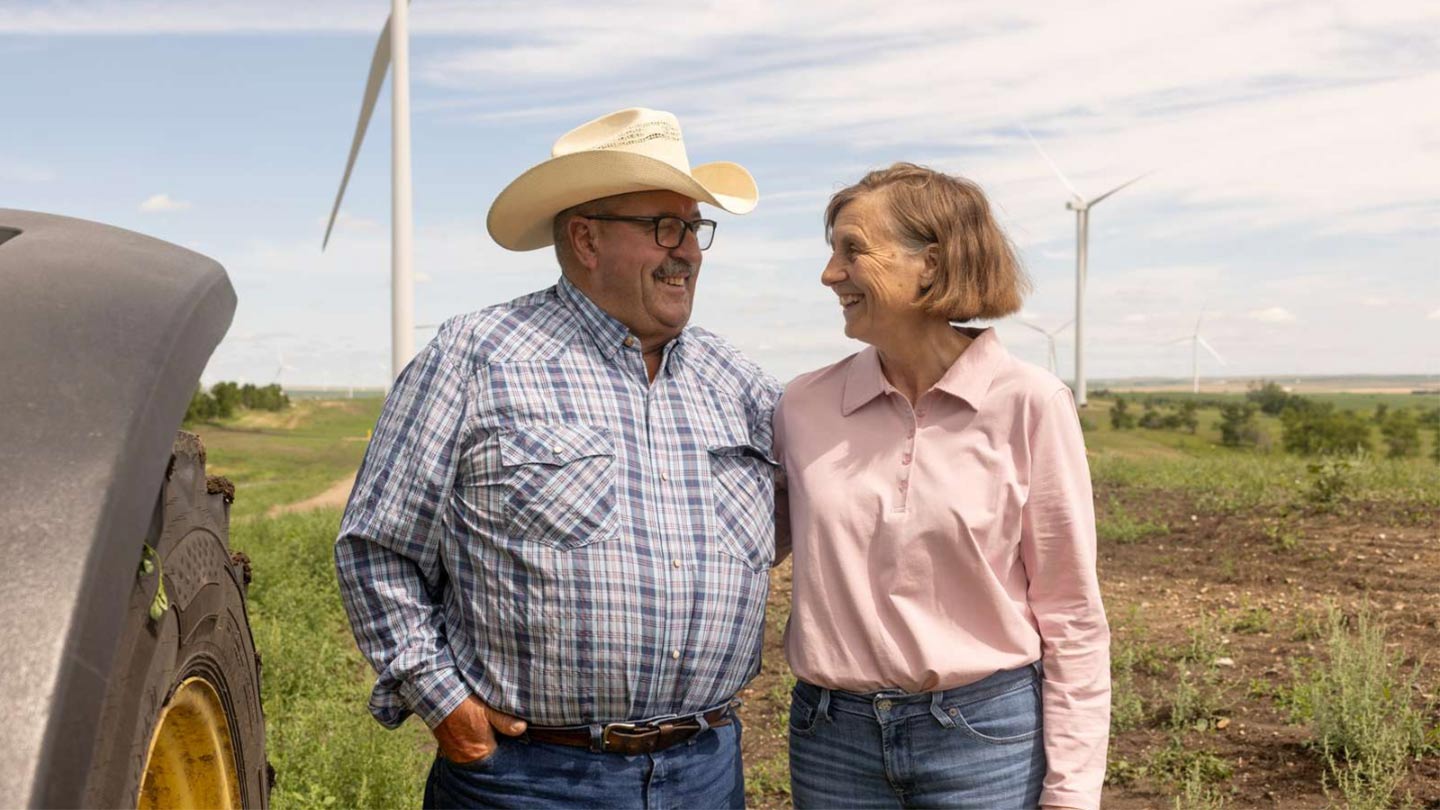
Still working the land

Anna and Clyde Meidinger
McIntosh County, North Dakota

It all started with a conversation around a kitchen table in a ranch house in McIntosh County. Before there were turbines on the horizon, “the Badger Wind Farm got its name right here,” says Clyde Meidinger. Clyde, born and raised on the ranch, and his wife Anna had already signed one of the first wind agreements in the area.

Together with the team developing the wind farm, the ranchers discussed what the county’s future wind farm could be named. They wanted to come up with a name that would have meaning to the people within their community. Then, someone brought up the name “Badger,” the town of Wishek’s historic school mascot—a name people in town would recognize—and Badger Wind Farm was born.

Anna, originally from Sweden, met Clyde in California and bonded with him over a mutual love of horses.

During their years together living out west, they saw early wind projects in the state and the potential power that wind could generate. They moved back to his home of North Dakota in 1994 and married a few years later. There, they built a life around ranching, cattle, and the land that has been in Clyde’s family since the early 1900s.

When the idea of installing wind turbines was first raised, they simply saw that as another practical way to make use of his land. It wasn’t some abstract concept of alternative energy that grabbed them. Instead, it was about how harnessing the power of wind could help them deal with the practical, everyday matters of life on a family farm.

“I hope future generations understand how much hard work is involved [in farming] and how much risk people are really taking,” Anna says. “You're dependent on the weather. You have outside factors that control your finances. We can't set prices for our products.”

That is why the Meidingers see Badger Wind as more than a power project. Like many small towns across the Great Plains, communities in McIntosh County have watched people move away, businesses close, and local tax bases get stretched thin. Clyde knows what happens when towns lose the activity that keeps schools, hospitals, roads, and volunteer services supported. And he knows that sometimes it’s necessary to look outside the community for that support.

The turbines take up a small piece of the Meidingers’ property, and the ranch continues to operate around them.

“When you're looking at how little space that tower takes away, it's a no-brainer,” Anna says. They still bale hay, check cattle, maintain fences, and work around the same weather that has always shaped the day. Clyde says the project has also improved access to parts of their land through upgraded roads and infrastructure.

Beyond the ranch, Anna and Clyde point to the activity the project brought into town during construction: crews buying food, filling hotel rooms, changing oil, replacing tires, and spending money at local businesses.

The town and even the surrounding communities benefited. It's a financial boost that hopefully keeps the community going.

– Anna

And tax revenues and community investments from Orsted are real: they help maintain roads, fund schools, and offer local services.

Today, when Clyde looks across the ranch and sees the turbines turning, he sees one more way to keep working land working. Beef prices can rise and fall. Weather can change plans overnight. But the need for power is not going away, and the wind gives their land another steady purpose. 

“Energy is prosperity. Wherever there’s energy, there’s prosperity.”

– Clyde Meidinger, McIntosh County farmer and rancher

Hear from local community members

We are investing in wind and solar projects across the U.S., partnering with communities from development to decommissioning. Our goal as good neighbors is to build long-lasting relationships with local people and businesses wherever we are. These community voices highlight some of those relationships and projects across America.

Investing in communities With each clean energy project we build, our goal is to become a part of the neighborhood. That means supporting organizations and businesses to boost the economy, support education and conserve the local environment.