Built for the long haul

Jerry Bettenhausen
Farmer, rancher, and lifelong McIntosh County resident

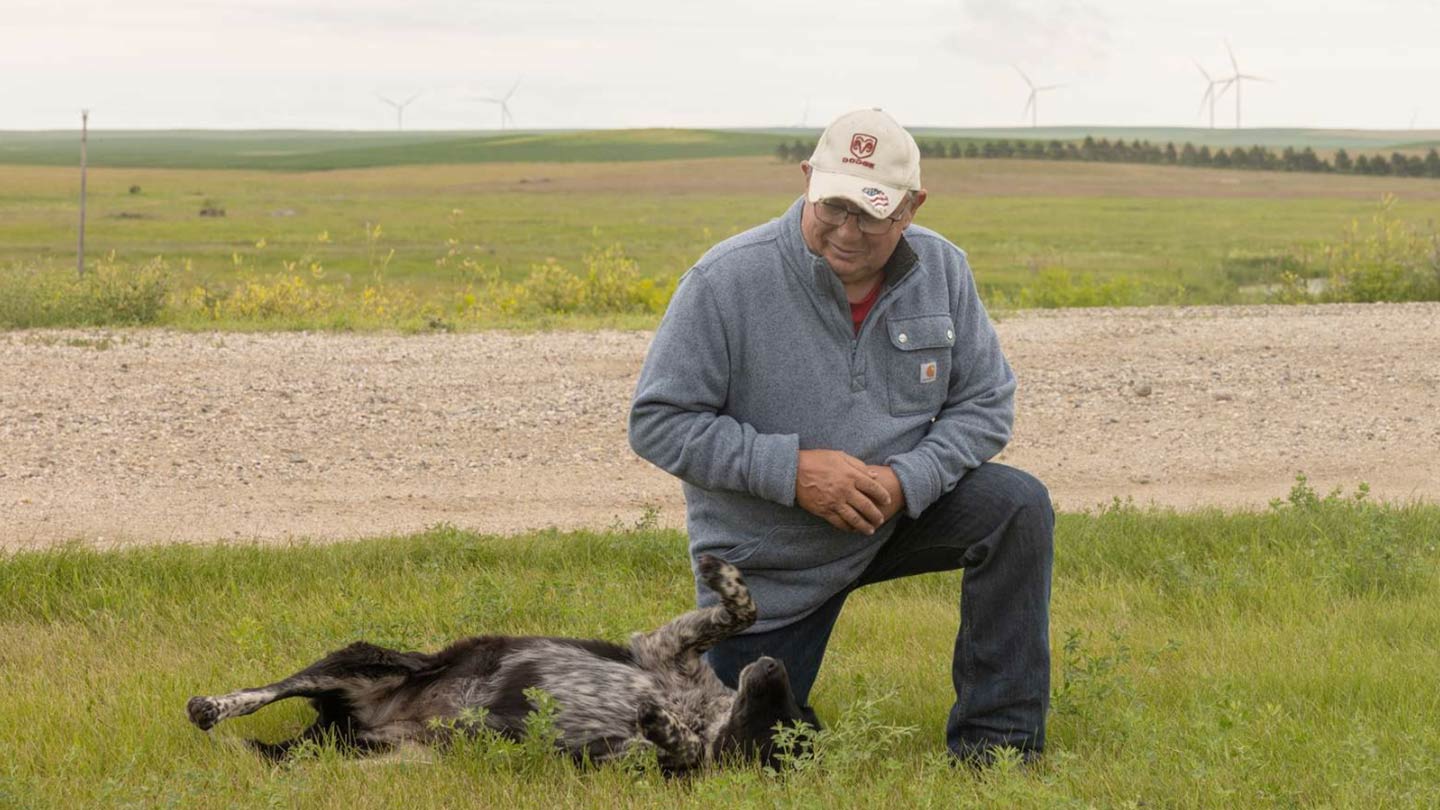
Jerry Bettenhausen doesn’t get very sentimental when things change. He’s lived through too much for that. After growing up on the North Dakota farm that his family started in 1907, he left to learn welding and work construction. He spent five years at one of the state’s largest coal-fired power plants, returning home when his father was ready to retire.

Ever since Jerry took over the family farm, he has approached everything from a practical standpoint. That means looking at a situation and figuring out what will best help him get the job done. He has kept his land going one season at a time, raising cattle, repairing old equipment, and weathering blizzards.

Through lean years when work was hard, his family kept the original farmhouse standing—and the farm up and running—all with an eye toward the children and grandchildren who will work the land themselves one day. “Being a good steward of this land means leaving it in better shape than when you got it,” he says. “Not overdoing the fertilizer, not overdoing the chemicals, just leaving it better for the next generation.”

There is no such thing as a slow day running a family farm that supports multiple family members. That daily work has given him a clear-eyed view of what it takes for rural families to keep going. “Farming is a very high-risk business,” he says. “You got better odds at a casino some days.”

When he started hearing about wind turbines possibly coming to McIntosh County, Jerry analyzed them from a practical point of view: another source of power, another way for family farms to bring in steady income.

Working at the power plant taught me one thing: we're never going to have enough electricity. We need every source of electricity we can get.

Jerry Bettenhausen

McIntosh County farmer and rancher

The turbines occupy only a small portion of the land while allowing ranching and farming operations to continue around them. More importantly, he says, they create long-term revenue that helps families prepare for the future. “To me, it’s added income,” he says. “It’s like having another Social Security check. If I could have another tower, I’d take it.”

The turbines have become a part of the landscape. He sees cattle, fields, windbreaks, roads, and family land still doing what they have always done. The turbines are another part of the working view, the next practical adjustment in a place that has always had to adapt.

Jerry also points to the broader benefits he has seen in town. During construction, workers filled local restaurants, gas stations, parts stores, and hardware shops. He saw pickups parked outside places that hadn’t had a full lot in a while. Since operations began, he has watched Orsted contribute to local organizations including the fire department, the community pool, and schools. “The jobs, the tax revenue, the donations: all of it helps,” he says.

“For a small town, that makes a difference. Things are changing in this world. We need different ways of producing electricity, and we need to pay attention to the future.”

- Jerry Bettenhausen, McIntosh County farmer and rancher

When Jerry looks across his land today, he still sees the same farm his family built more than a century ago. And now, turbines turn, helping produce power and income from the same wind that has shaped life on the prairie for generations.

“I hope the next generation understands how much hard work went into keeping this place together,” he says. “That’s what matters most.”

Hear from local community members

We are investing in wind and solar projects across the U.S., partnering with communities from development to decommissioning. Our goal as good neighbors is to build long-lasting relationships with local people and businesses wherever we are. These community voices highlight some of those relationships and projects across America.

Investing in communities With each clean energy project we build, our goal is to become a part of the neighborhood. That means supporting organizations and businesses to boost the economy, support education and conserve the local environment.